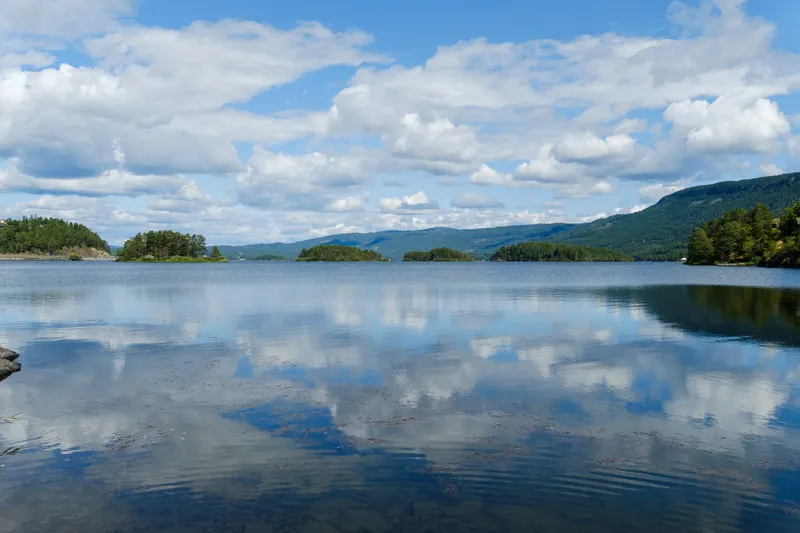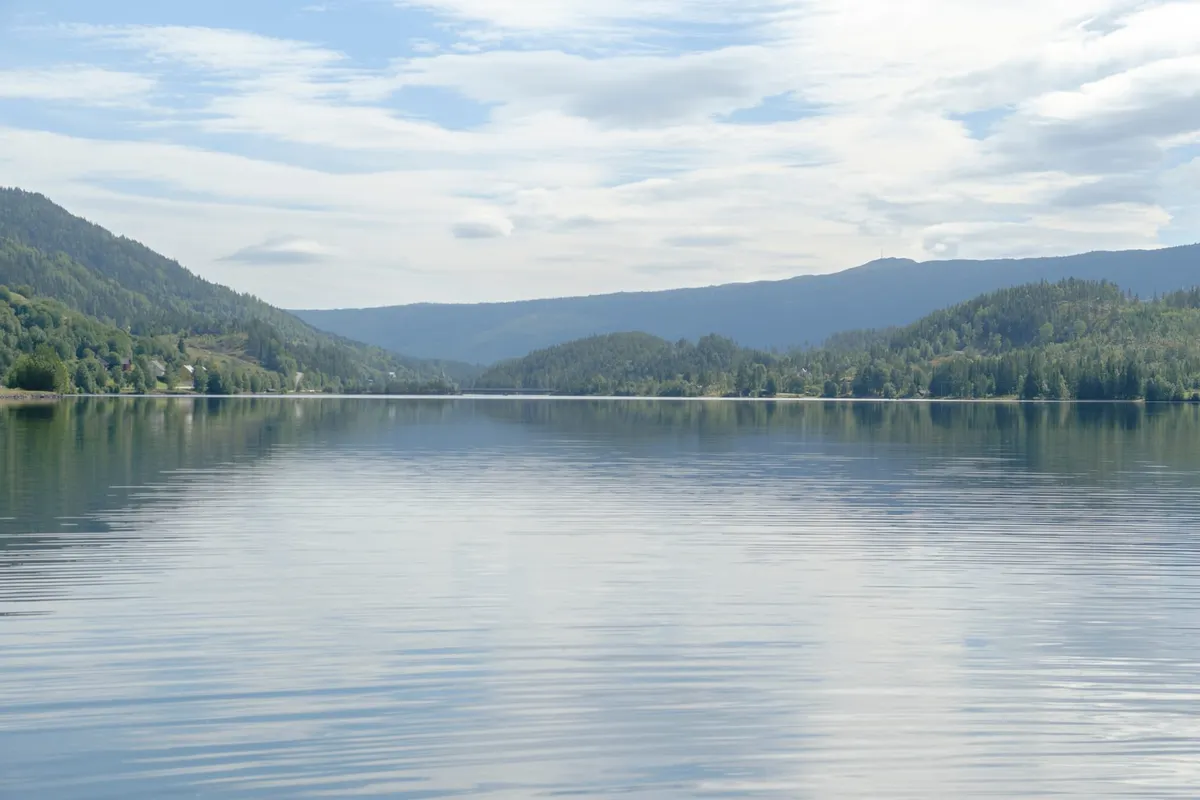
The drive was full of water. Creeks and rivers connecting different lakes across the Hardangervidda plateau, as if they were veins flowing through the body, moving water from one point to another. The terrain, mountains, and hills provided a green, yellow and sometimes brown backdrop for the water. Norway, it seems, is a country of two elements: mountains and water.
As we made our way towards the edge of the plateau, we followed the water. Zig-zagging down the mountains first, then climbing back towards Lake Hovsfjorden, and discovering new lakes with blue glacial waters. Water as blue as the sky, but as clear as the air that we were breathing. It seemed, sometimes, as if the water was not moving, still, standing as a perfect mirror reflecting everything around it and blurring the line between the trees, sky and water.
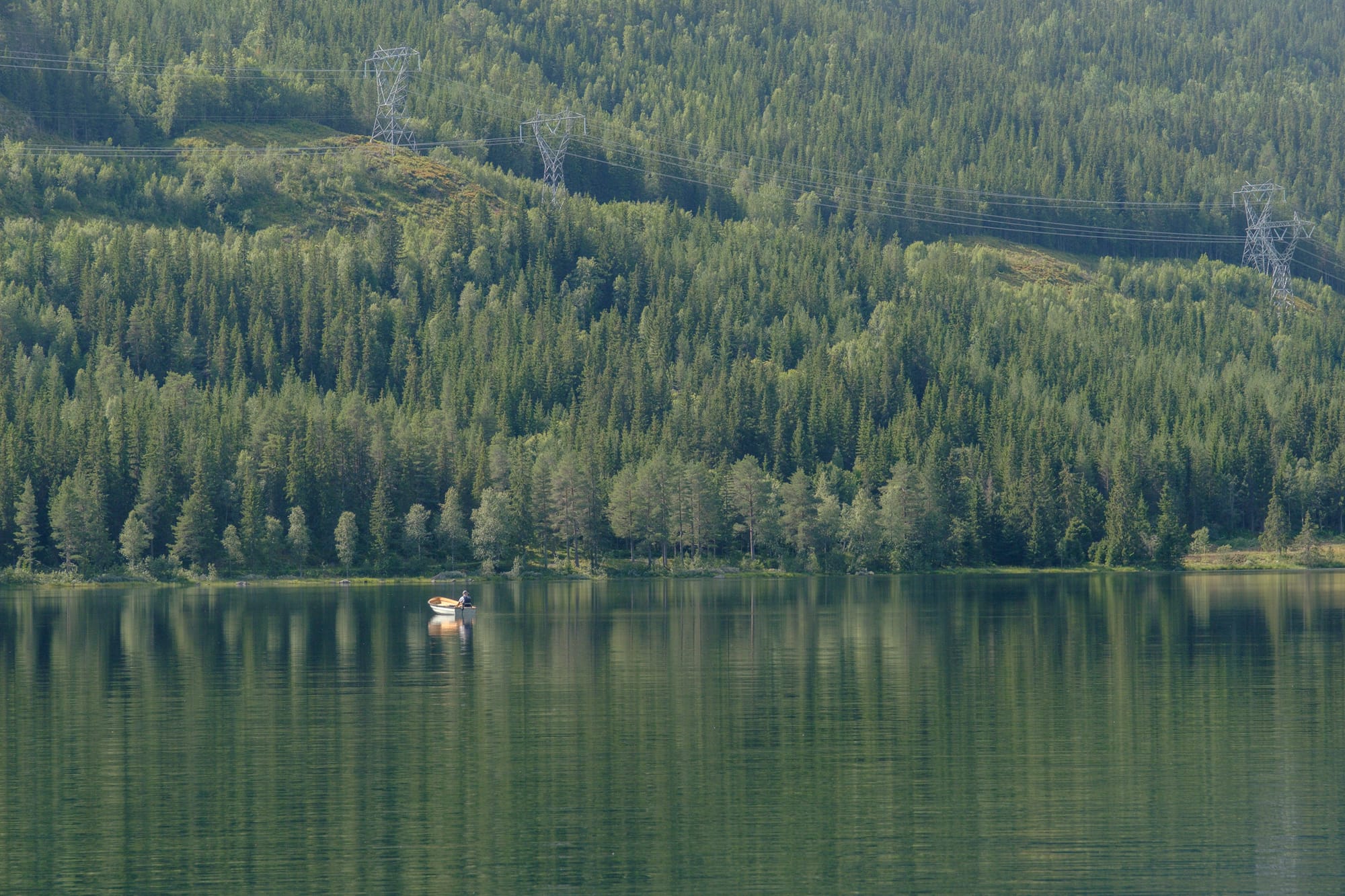
The ice-blue colour was just the preamble for the eyes before taking a jump into a lake. We jumped into the lake, one of those jumps in which the moment you are floating on the air, the brain starts to prepare for the cold. And as soon as the skin touches the water, the body gets covered in what feels like a thousand needles poking around, as if little crystals were formed and broke all at the same time, over and over. Then, the body gets used to it, breathing returns to the normal rate, and the rest of the senses come back one by one. Drying the skin with the sun after being in cold waters: first the shivering, then slowly getting back to normal temperature, and finally feeling the sun slightly burning the skin, as if it is letting you know that you can continue. Keep moving.
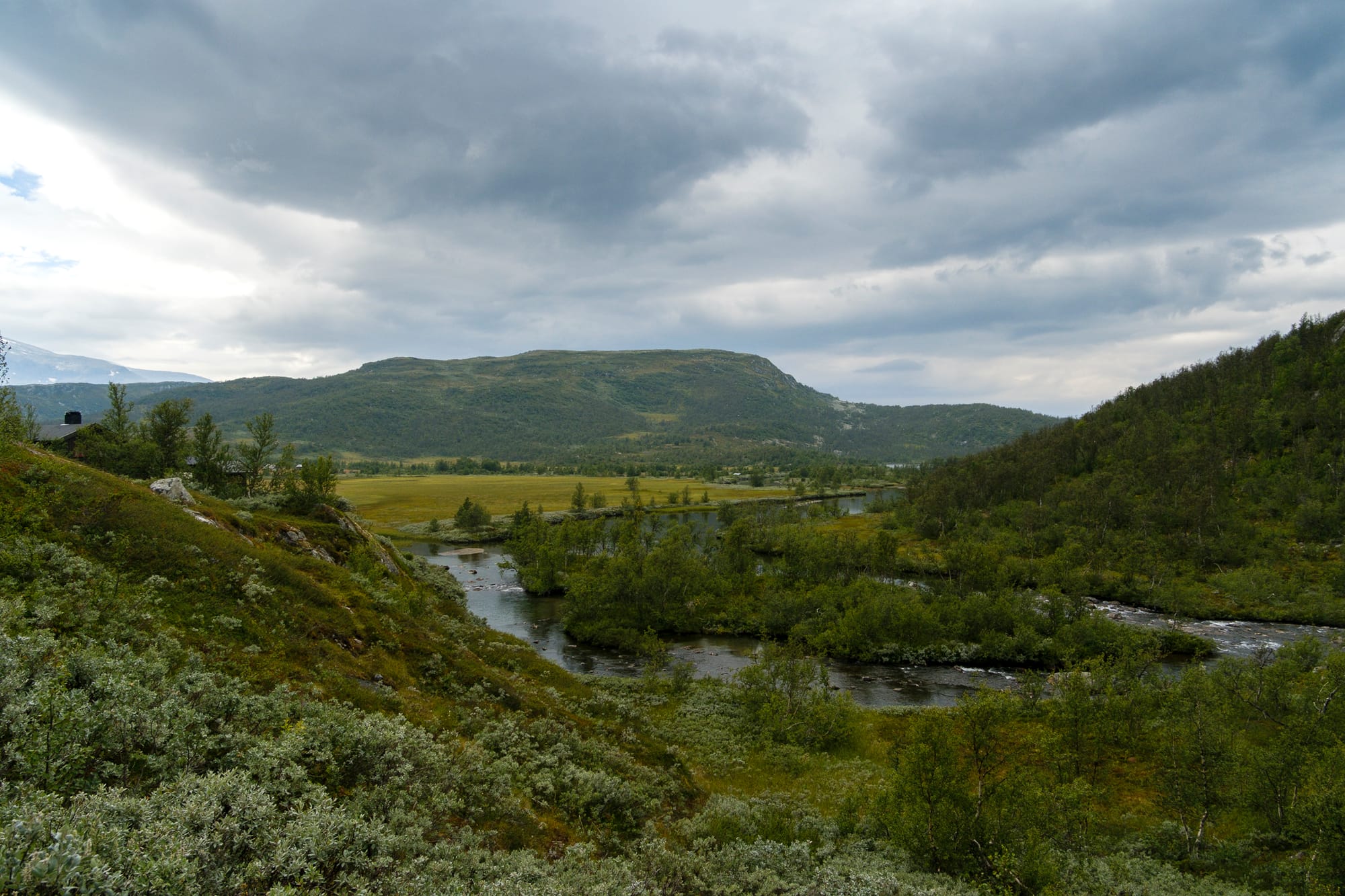
And to move we did. Again following the water, but now moving upstream. We parked and started a walk upwards, following first some cautionary signs talking about the dangers of crossing the upstream river and getting trapped in the current before the water falls. Then, following the sound. First, as a distant murmur filtered by the forest that slowly increases in volume until it becomes that unmistakable thundering sound of water falling down and crushing what lies beneath it. Until we are faced with its full presence: a river, or what looks more like a small and tranquil lake that morphs into a roaring drop.
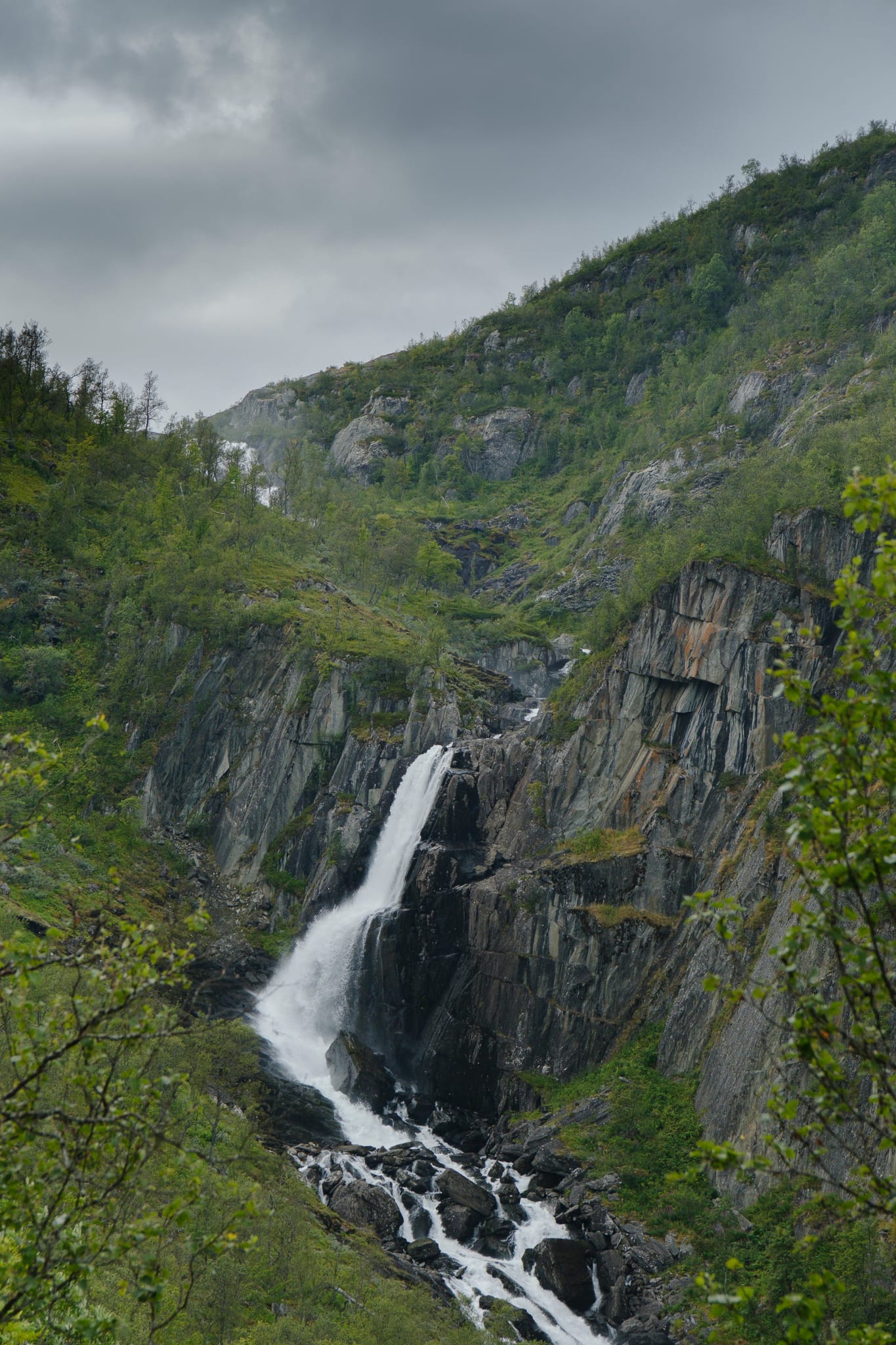
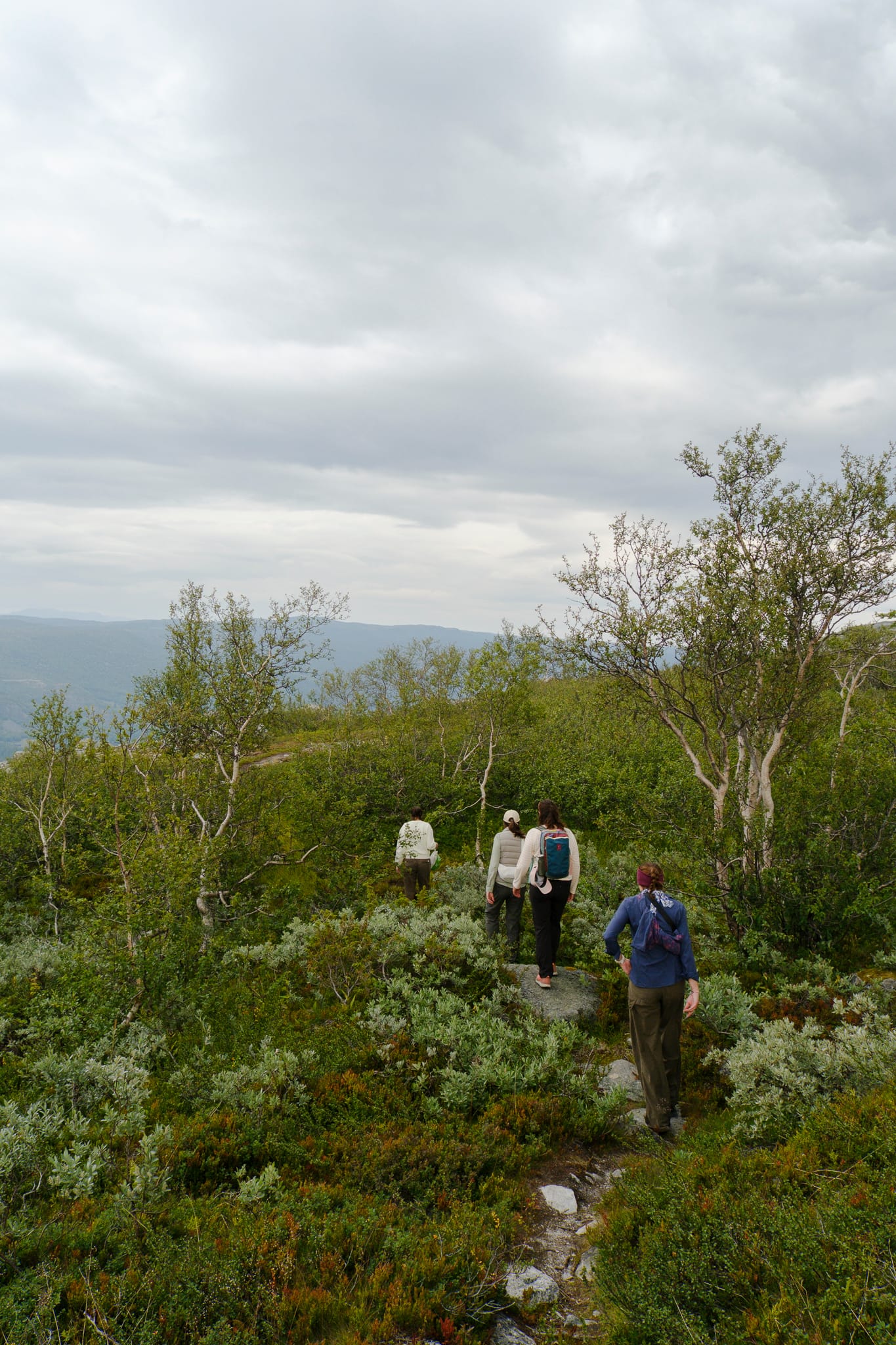
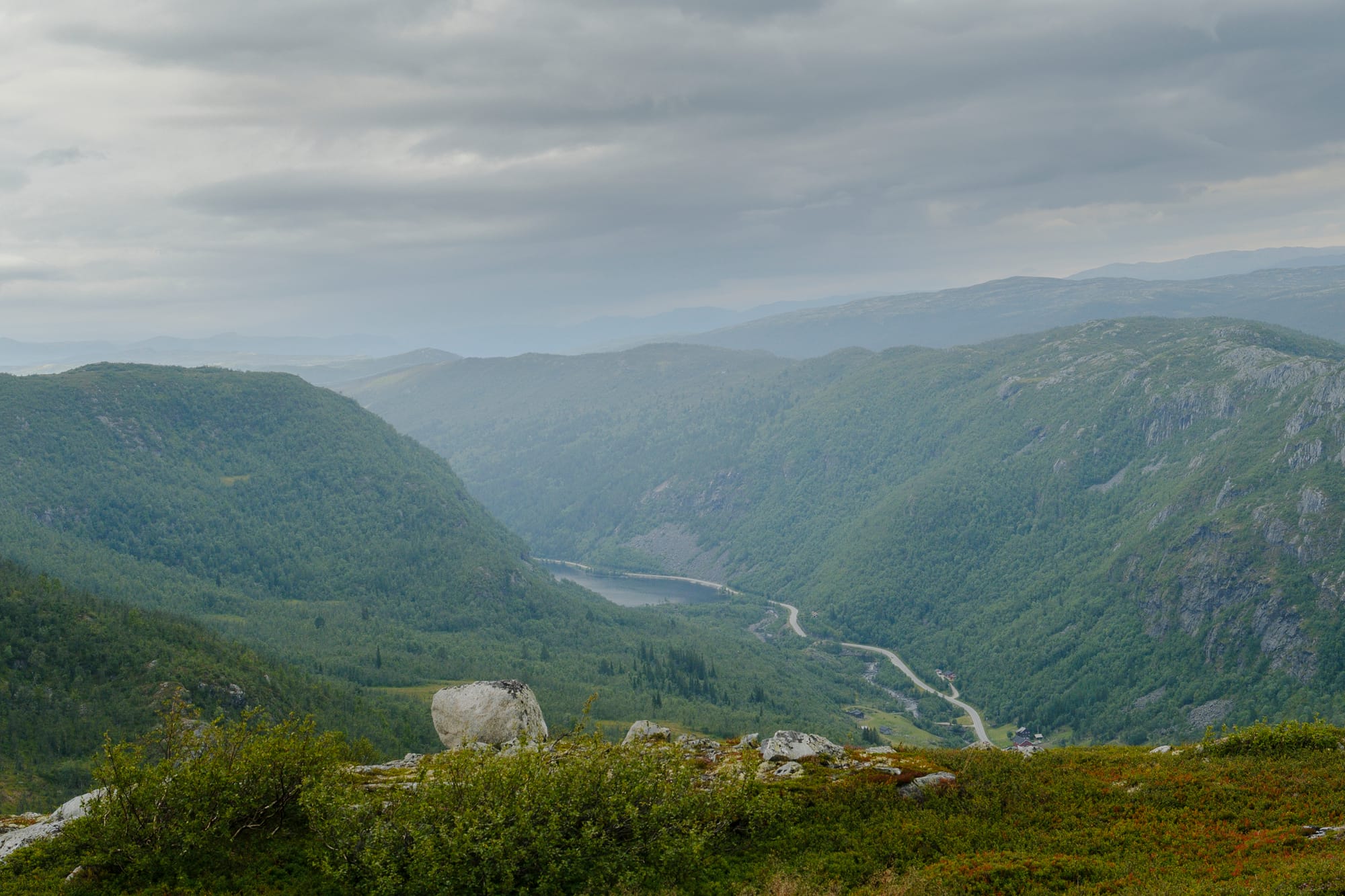
The drop then becomes a river, or a path that keeps flowing towards the lips of the plateau, that place where sudden drops start shaping the fjords, where the sides of the mountains become walls of canyons. It is a place to look at the world from atop, while standing above clouds. We made our way down taking the border of the mountains. At the bottom: more water and a sense of calmness. The opening of the plateau transforms into a small and well-contained space delimited by green walls on the sides, and water on the horizon.
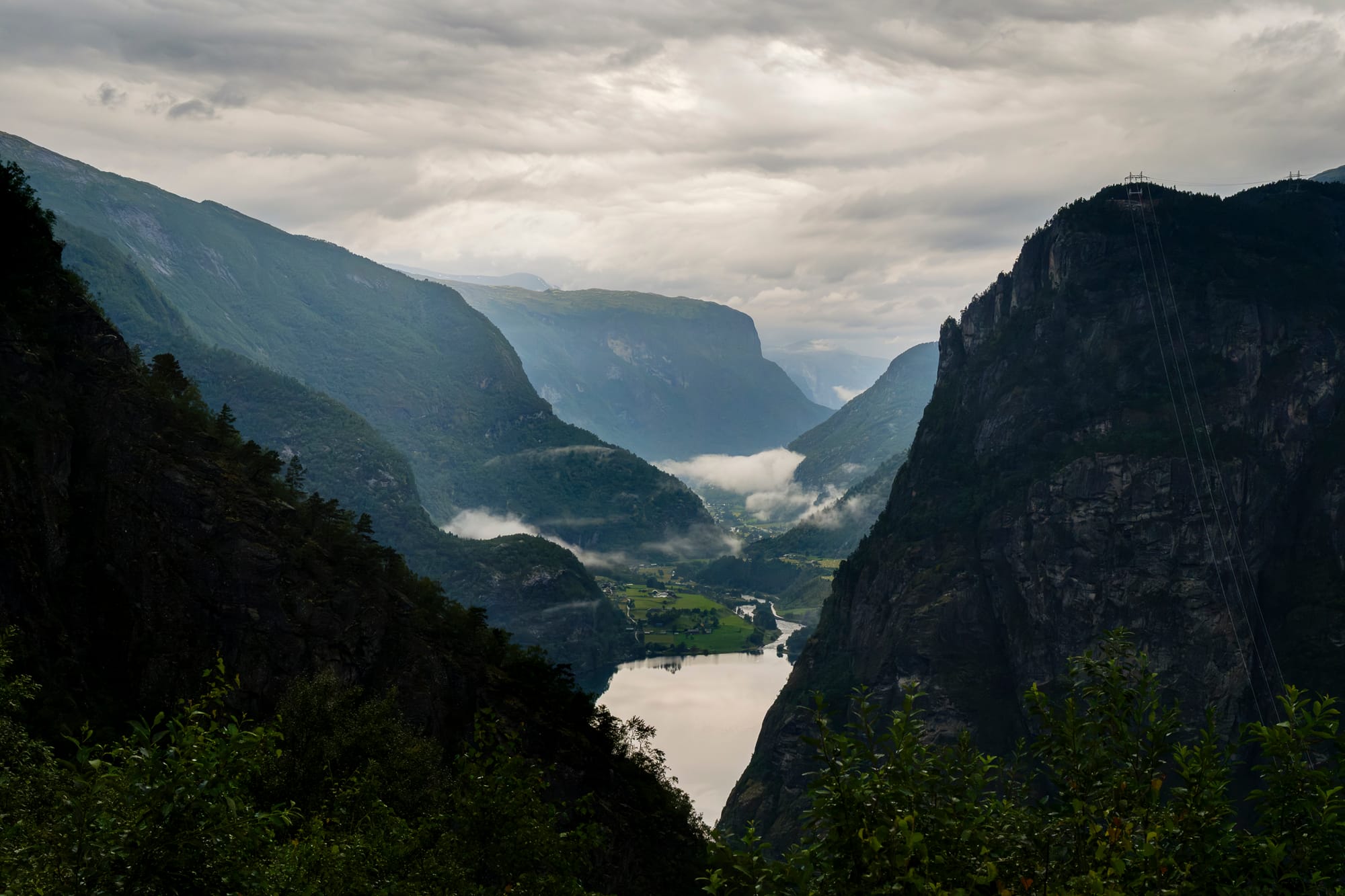
The blue of the water turns into a deep green, a product of the reflection of the surroundings, covered by clouds. A drizzle and clouds.
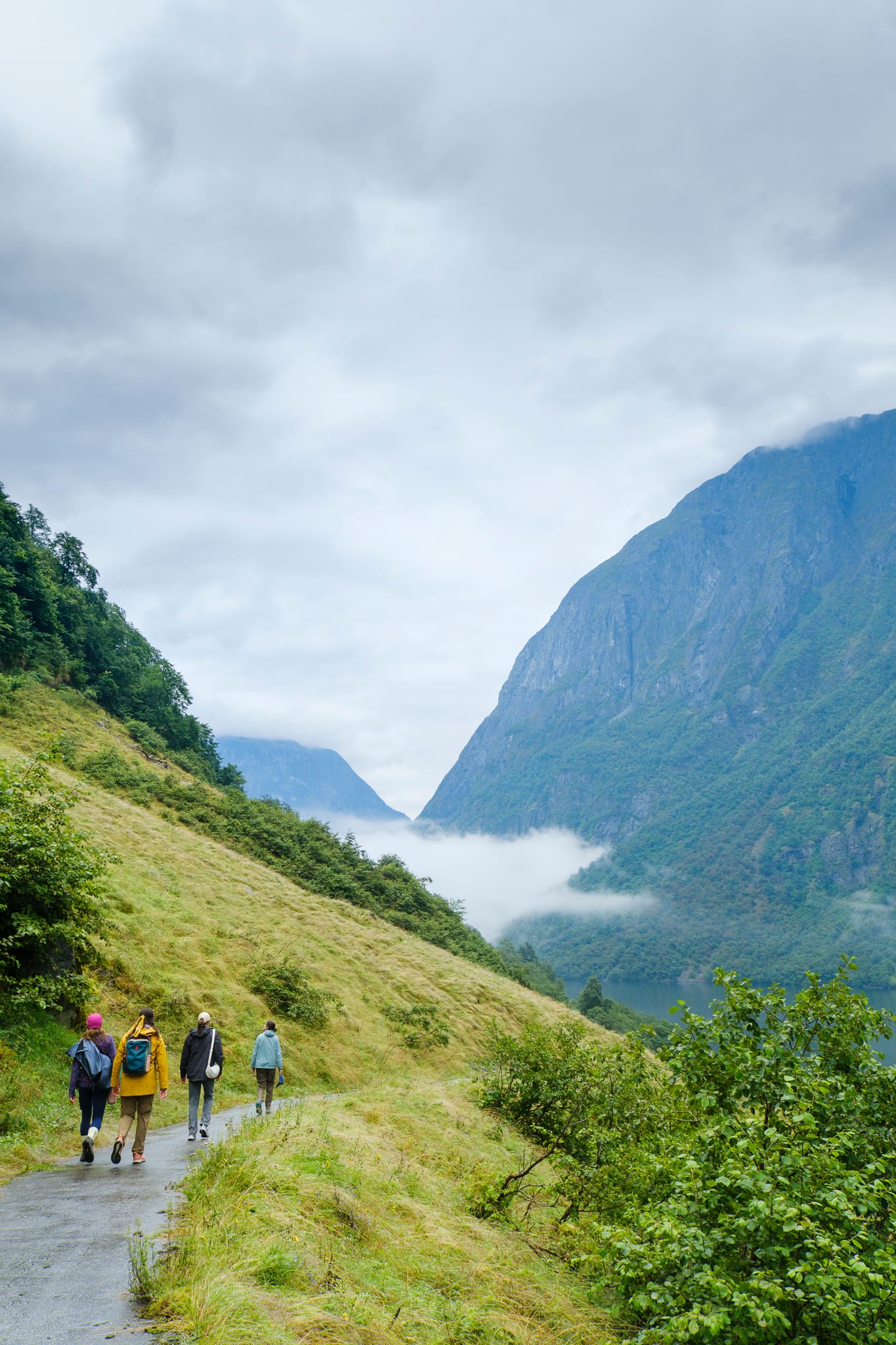
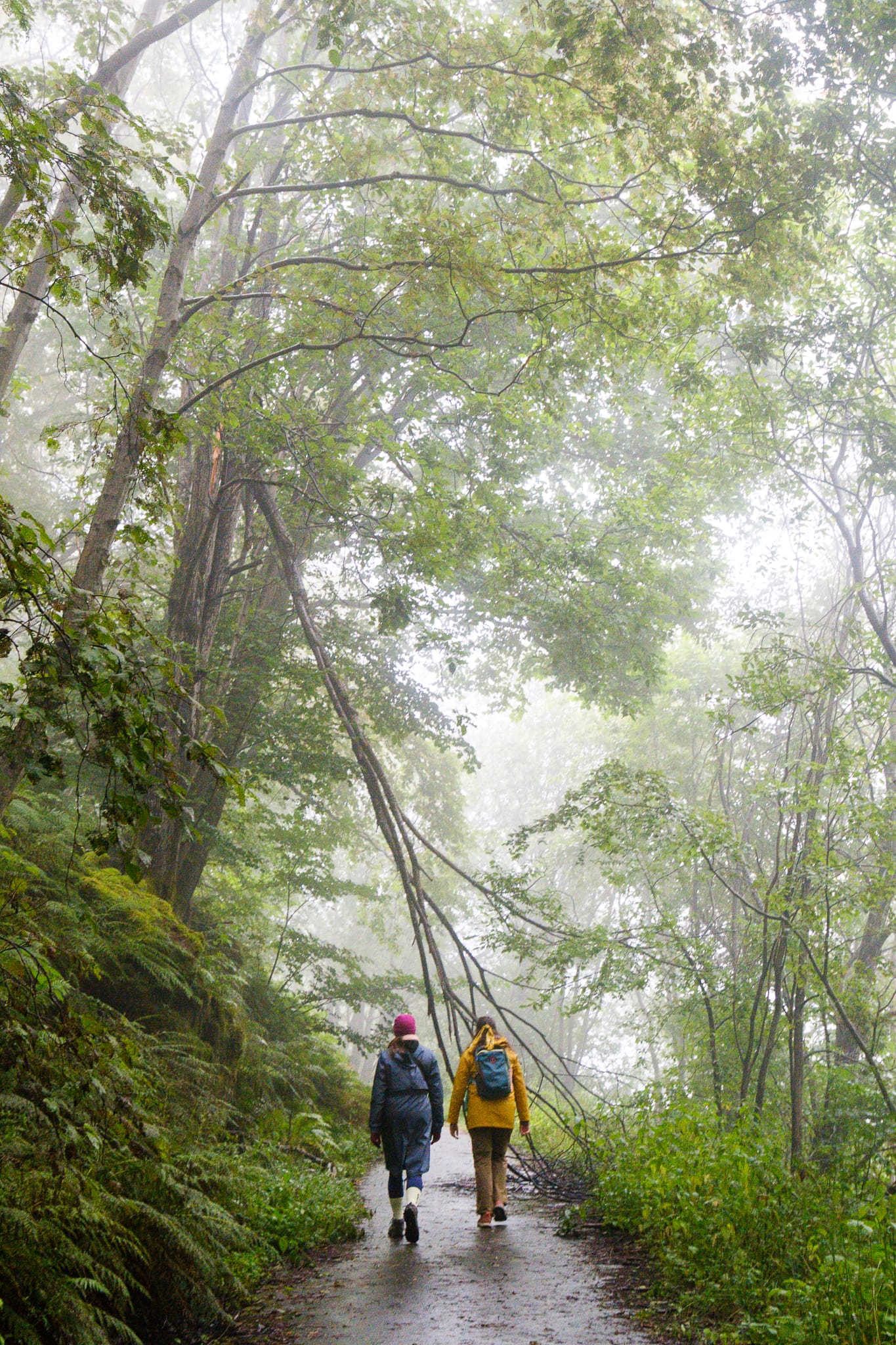
The fjord is different, the scale measured in kilometres. A place in which any boat feels small, floating in the long stretch of water, and making its way from the shore to what might be beyond what the eyes can see. Walking by the side of the fjord, the green landscape abruptly getting into the water, waterfalls dotting the surrounding hills, as if water was slowly dripping from the top.
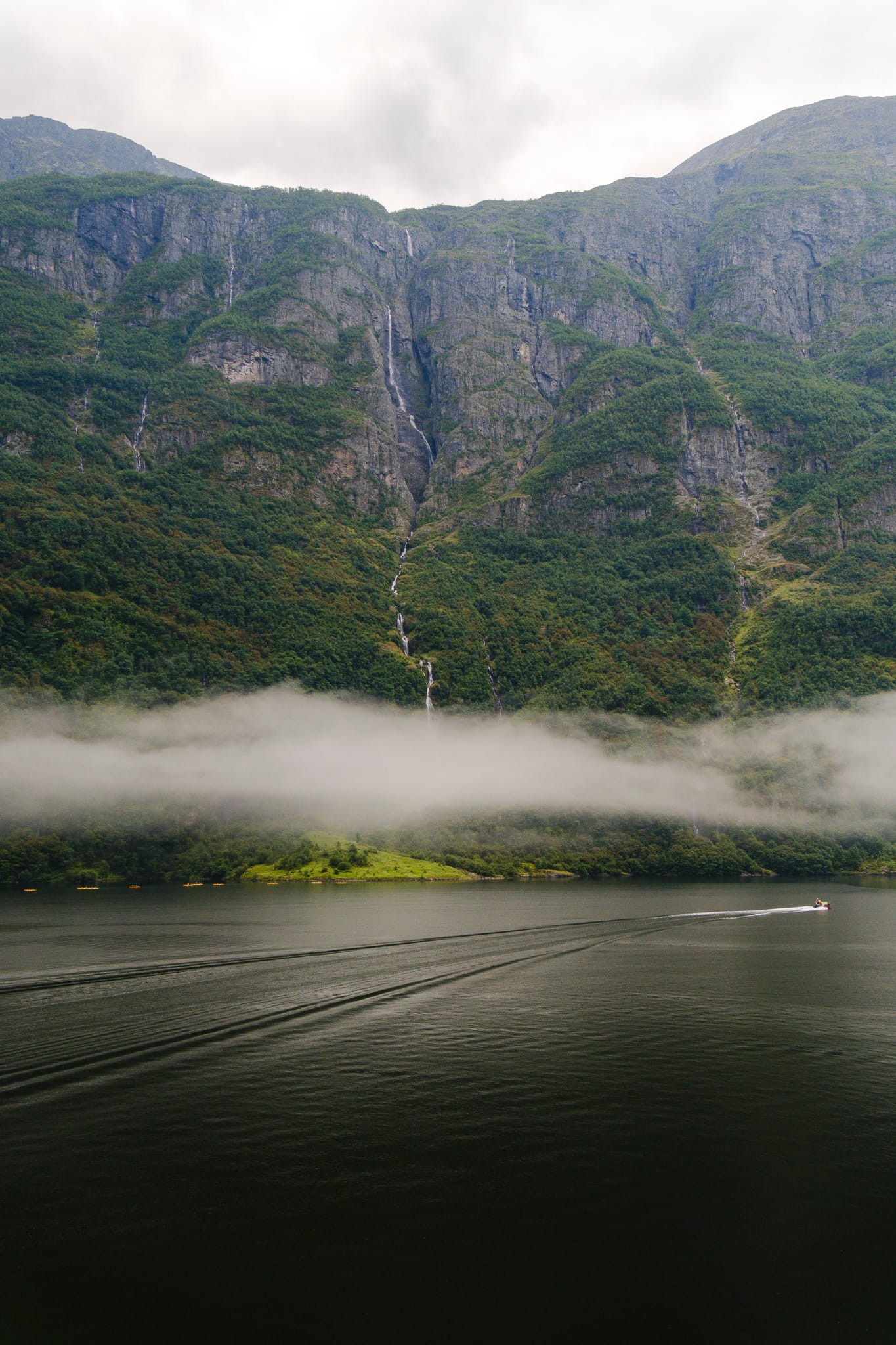
And then, being in the fjord. Switching from walking to paddling, letting the hands do the work that propels us into the vastness of nature. With every paddle stroke feel the drops of water, balance the kayak, and move. Repeat and get into a rhythm. All while trying to keep the camera dry, taking it from time to time from the dry bag and snapping a couple of pictures. And in the middle of it, a very, very lucky moment: a seal coming up to the surface to show its face.
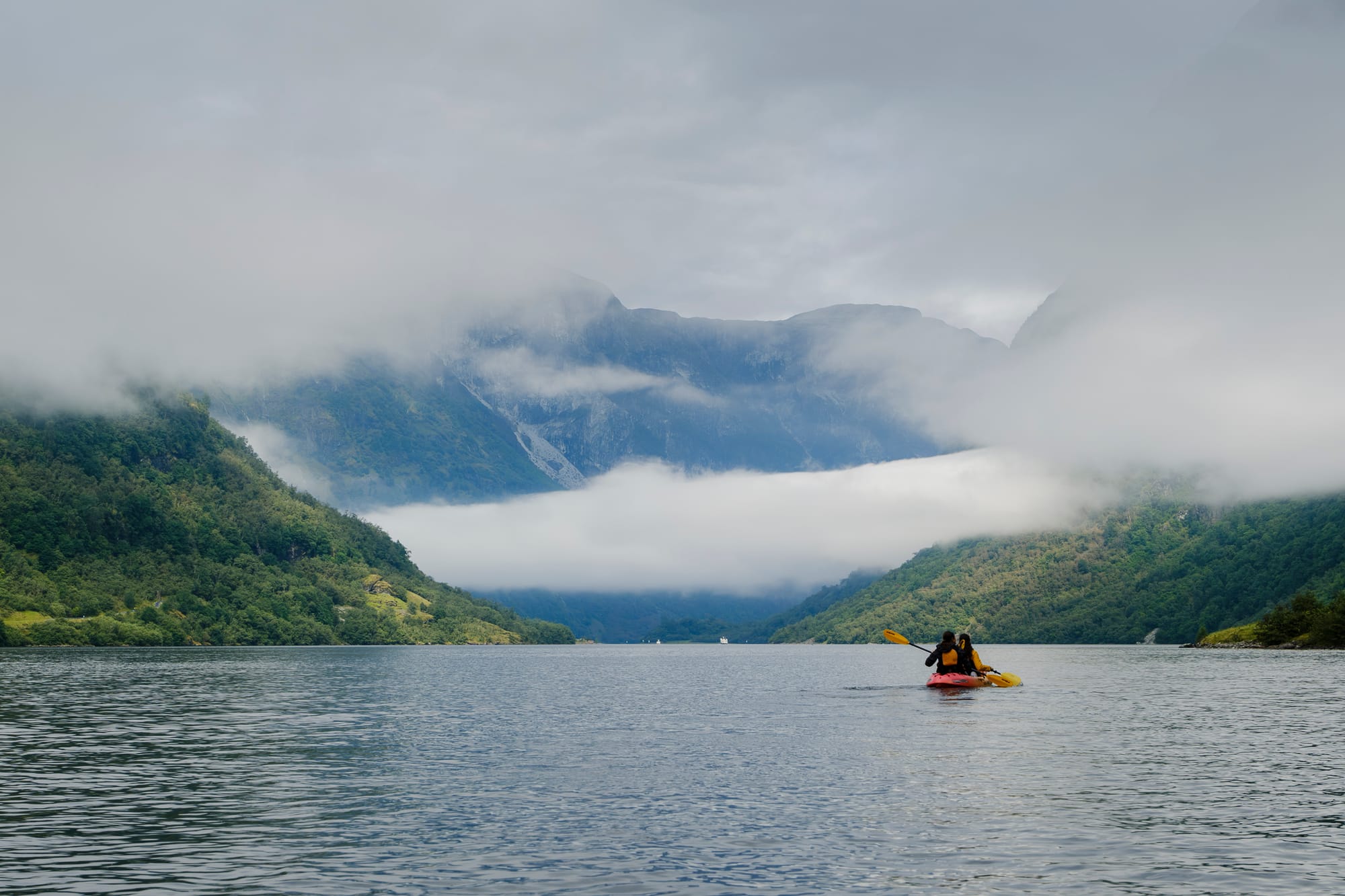
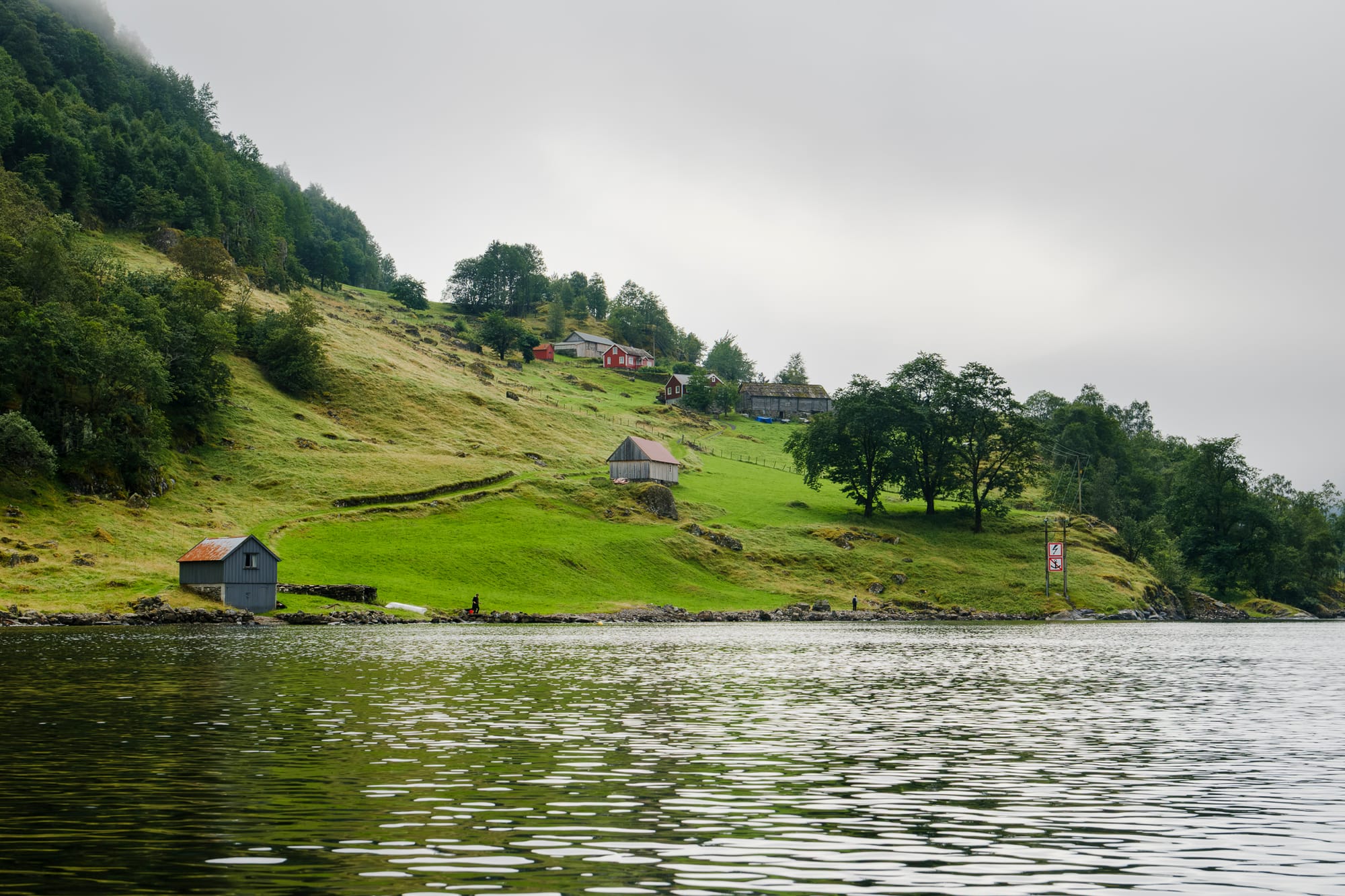
We went to the mountains, and came to the water.
P.S. Now, it's your turn, hit reply, and tell me the story behind your jump into cold water. There's always a good story leading to the jump. I read and reply to every email, looking forward to hearing from you!